Introduction
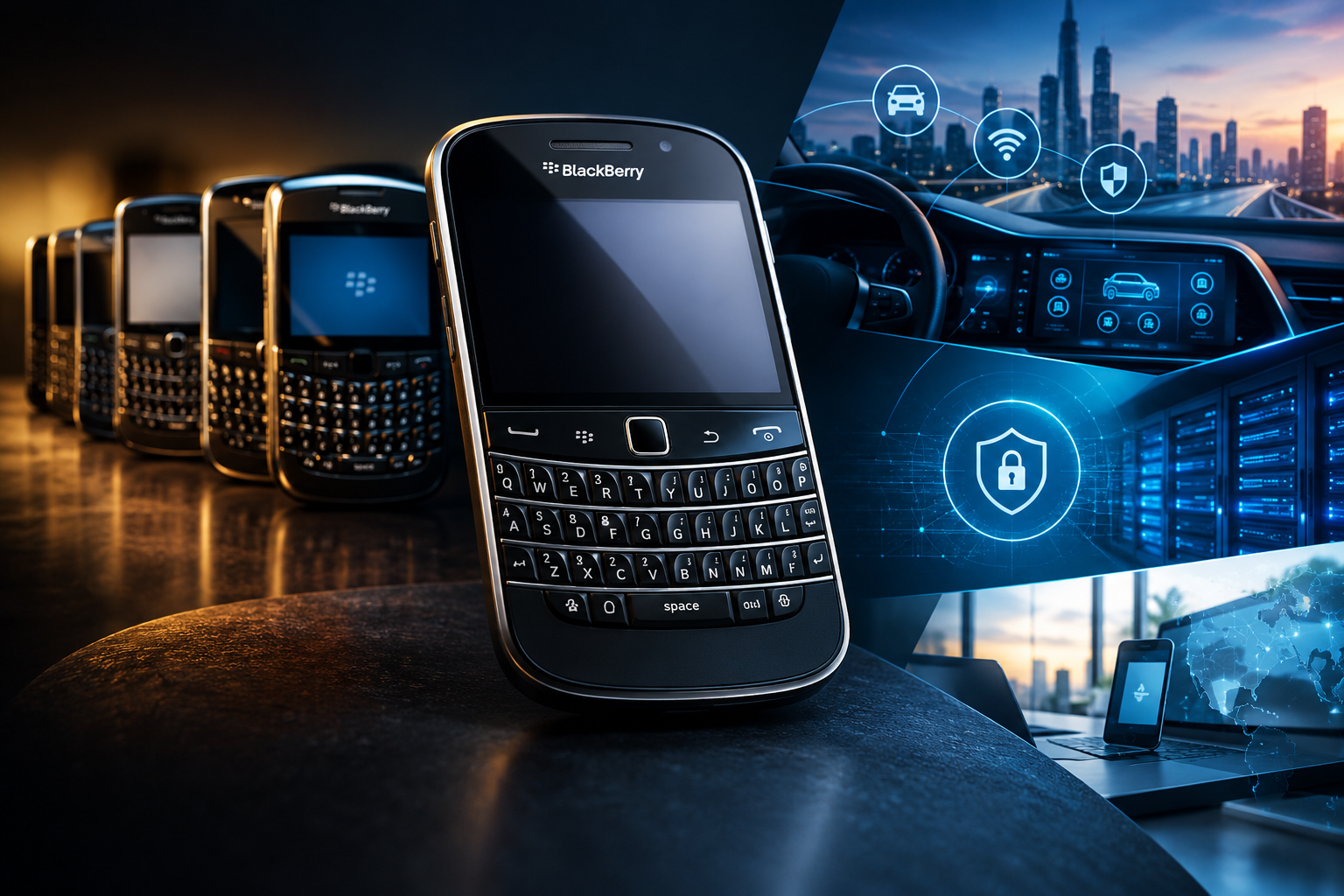
There was a time when owning a BlackBerry smartphone was a symbol of professionalism, productivity, and technological sophistication. Before touchscreen smartphones became the standard, BlackBerry devices dominated corporate offices, government departments, and business communities worldwide. Their physical QWERTY keyboards, secure email services, and reliable messaging features made them some of the most recognizable mobile devices of the early 2000s.
However, the smartphone industry changed dramatically with the arrival of the Apple iPhone and the rapid growth of Android devices. Consumers began demanding larger touchscreens, better cameras, extensive app libraries, and more versatile entertainment features. BlackBerry struggled to adapt to these changing expectations, eventually stepping away from manufacturing smartphones. Yet, the company did not disappear. In 2026, BlackBerry continues to operate as a technology business focused on secure communications, embedded software, and connected systems.
Interested in exploring technology and digital innovation? Click Here to discover more.
The Rise of BlackBerry: How It Became a Smartphone Icon
BlackBerry’s journey began long before smartphones became everyday necessities. Founded in 1984 as Research In Motion (RIM) in Waterloo, Ontario, Canada, the company initially concentrated on wireless communication technologies. Its early innovations helped businesses exchange information electronically, laying the groundwork for the mobile email services that would later make BlackBerry famous.
During the late 1990s and early 2000s, BlackBerry introduced devices that allowed professionals to send and receive emails while away from their desks. This capability was revolutionary at a time when mobile phones were primarily used for voice calls and text messages. BlackBerry gradually developed a reputation for reliable communication, efficient messaging, and business-friendly security.
The introduction of the BlackBerry 850 in 1999 marked an important milestone. This wireless handheld device supported email communication and featured a compact keyboard. Subsequent devices expanded the company’s capabilities, bringing voice calls, messaging, web access, and organizational tools into increasingly sophisticated mobile products.
Link Here to explore more technology-related products and innovations.
Why Everyone Wanted a BlackBerry
BlackBerry’s popularity was not based on hardware alone. Its combination of communication software, enterprise security, and physical keyboard design created a distinctive user experience that competitors struggled to replicate during its early years.
One of its most influential features was BlackBerry Messenger, commonly known as BBM. The service allowed users to exchange messages through a dedicated platform, often using unique PINs to connect with contacts. Before messaging applications such as WhatsApp became mainstream, BBM was an important part of everyday communication for millions of users.
The physical QWERTY keyboard was another major attraction. Users could type quickly and accurately without relying on touchscreen keyboards. For professionals who regularly responded to emails, managed appointments, and exchanged documents, this design made BlackBerry particularly useful.
BlackBerry also developed a strong reputation for security. Its enterprise-focused services helped organizations manage mobile devices and protect sensitive communications. Businesses appreciated the ability to control corporate email access and apply security policies across employee devices.
These advantages helped BlackBerry become a preferred smartphone brand among executives, entrepreneurs, journalists, government officials, and corporate employees. At its peak, the company was much more than a phone manufacturer. It was a symbol of mobile productivity.
Want to discover more digital technology opportunities? Click Here to learn more.
The iPhone Changed Everything
The launch of the original Apple iPhone in 2007 transformed the smartphone market. Instead of concentrating primarily on email and business communication, Apple presented a device built around a large touchscreen, intuitive navigation, multimedia features, and a new approach to mobile computing.
The iPhone changed consumer expectations. People increasingly wanted smartphones that could handle web browsing, music, photography, entertainment, games, and communication through one integrated interface. BlackBerry’s traditional keyboard-focused devices began to look less appealing to consumers who valued touch-based interaction.
Apple’s App Store, launched in 2008, further strengthened its position. Developers gained a centralized way to distribute applications, encouraging the creation of mobile services that extended far beyond traditional phone functions.
Google’s Android operating system created another major challenge. Android manufacturers released smartphones at different prices and with diverse designs, making advanced mobile technology accessible to a broader audience. The expanding Android ecosystem attracted developers and consumers alike.
BlackBerry initially underestimated how quickly these changes would reshape the industry. Its existing customers valued secure messaging and productivity, but the wider market was moving toward smartphones that combined professional capabilities with entertainment and everyday convenience.
Link Here to explore more technology products and services.
The Mistakes That Cost BlackBerry Its Smartphone Leadership
BlackBerry’s decline was not caused by one decision. Instead, several strategic and technological challenges gradually weakened its competitive position.
1. Responding Too Slowly to Touchscreens
BlackBerry’s traditional keyboard was one of its greatest strengths, but it also became a limitation when consumers shifted toward touchscreen interfaces. The company eventually introduced touchscreen devices, including the BlackBerry Storm, but early attempts struggled to match the smooth, consistent experiences offered by competing smartphones.
BlackBerry later developed additional touchscreen products, yet the market had already begun moving toward Apple’s iOS and Google’s Android platforms.
2. A Weaker Application Ecosystem
Applications became a defining feature of modern smartphones. Consumers wanted access to social networks, streaming platforms, navigation tools, games, productivity applications, and countless specialized services.
BlackBerry’s application ecosystem struggled to attract the same level of developer support as its competitors. Fewer popular applications made its devices less appealing, while the smaller user base gave developers fewer incentives to prioritize the platform.
This created a difficult cycle: customers avoided the devices because of limited applications, and developers avoided the platform because of limited customers.
3. Delayed Platform Improvements
BlackBerry relied heavily on its established operating systems for years. Although the company eventually introduced BlackBerry 10, the platform arrived after iOS and Android had already gained substantial market share and developer support.
The BlackBerry 10 operating system offered useful multitasking features, a redesigned interface, and productivity tools. However, technical improvements alone could not easily overcome the market’s established preferences.
4. Increased Competition
Apple and Android manufacturers competed aggressively through hardware improvements, marketing, pricing, and software development. BlackBerry faced difficulties keeping pace with the speed of innovation across the wider smartphone industry.
As competition intensified, BlackBerry’s traditional strengths became less distinctive. Secure email and physical keyboards remained valuable features, but they were no longer enough to convince most consumers to choose its devices over the alternatives.
Click Here to explore additional technology-related opportunities.
BlackBerry’s Final Attempts to Save Its Smartphone Business
Recognizing the changing market, BlackBerry tried several strategies to revive its mobile hardware business.
The launch of BlackBerry 10 in 2013 represented a major effort to modernize the company’s smartphone experience. Devices such as the BlackBerry Z10 offered touchscreen navigation, while the Q10 retained the physical keyboard that loyal customers preferred.
The company also attempted to expand its reach by supporting Android applications and introducing devices with different designs. However, these initiatives struggled to generate the sales and developer interest needed to restore its former market position.
In 2015, BlackBerry introduced the Priv, its first major Android-based smartphone. The device combined Google’s Android operating system with a sliding physical keyboard, attempting to unite the familiarity of BlackBerry hardware with the broader Android application ecosystem.
The Priv attracted attention from technology enthusiasts, but it did not reverse the company’s declining smartphone fortunes. BlackBerry subsequently released additional Android devices, including the DTEK series and the BlackBerry KEYone, the latter developed in partnership with TCL.
These phones demonstrated that a market still existed for keyboard-equipped Android smartphones. Nevertheless, they represented a smaller niche rather than a realistic path back to mainstream smartphone leadership.
Interested in discovering more about the technology landscape? Link Here for additional information.
When Did BlackBerry Stop Making Smartphones?
In September 2016, BlackBerry announced that it would stop designing and manufacturing its own smartphones internally, shifting hardware development toward external partners while concentrating on software and services.
This decision marked a major turning point. For years, BlackBerry had been identified primarily with physical devices, keyboards, and mobile messaging. Moving away from hardware meant abandoning the business that had made the company famous.
The company subsequently worked with manufacturing partners to keep its brand present in the smartphone market. TCL handled several BlackBerry-branded Android devices, including the KEYone and KEY2.
However, TCL announced in 2020 that it would no longer manufacture BlackBerry-branded mobile devices after the end of August that year. A separate attempt to revive the brand through a planned 5G smartphone with a physical keyboard also failed to produce a widely available commercial product.
On January 4, 2022, BlackBerry announced that it would discontinue legacy services for its BlackBerry 7.1 operating system and earlier versions, BlackBerry 10, and BlackBerry PlayBook OS. The announcement affected the usability of many older devices that depended on those services.
These developments effectively closed the chapter on BlackBerry as a mainstream smartphone platform. The company retained its name and technology businesses, but it was no longer a major competitor in the consumer handset market.
Click Here to discover more about modern technology and digital services.
What Does BlackBerry Do in 2026?
Although BlackBerry no longer dominates the smartphone market, the company remains active in the technology industry. Its business has evolved toward software that supports secure communications, automotive systems, and other applications where reliability is essential.
As of 2026, BlackBerry’s principal business areas are QNX and Secure Communications. Rather than selling smartphones directly to millions of consumers, the company supplies software and services to automakers, enterprises, governments, and other organizations.
This transformation demonstrates that a company’s public identity can change even when its underlying technological expertise remains valuable. BlackBerry’s experience in security, communication, and reliable software continues to influence its modern business.
1. QNX: The Technology Behind Modern Vehicles
QNX is one of BlackBerry’s most important assets. It develops operating systems and embedded software for applications that require dependable, predictable performance.
QNX technology is used in automotive systems, including digital instrument clusters, infotainment platforms, and certain safety-related applications. Its software also supports technologies in medical equipment, industrial automation, robotics, and other embedded environments.
According to BlackBerry’s 2026 corporate reporting, QNX technology is deployed in more than 275 million vehicles. This illustrates how the company has established a presence in an industry far removed from the consumer smartphone market.
Modern vehicles increasingly depend on software to coordinate displays, sensors, connectivity, driver-assistance features, and electronic control systems. As vehicles become more connected and software-defined, reliable embedded operating systems become increasingly important.
QNX’s role is not necessarily visible to drivers. Someone using a modern vehicle might benefit from software supported by QNX without ever seeing the BlackBerry name on the dashboard.
Link Here to explore more technology-focused products and services.
2. Secure Communications for Businesses and Governments
Security remains central to BlackBerry’s identity. The company provides software and services designed to help organizations protect sensitive information, manage devices, and maintain reliable communications.
Its Secure Communications business includes solutions for regulated industries, enterprises, and government organizations that require strong security controls.
BlackBerry Unified Endpoint Management, for example, helps organizations manage and secure devices used to access corporate information. Such solutions are important when employees work across offices, remote locations, and mobile environments.
The company also offers secure communications products such as SecuSUITE, which supports protected voice and messaging, and AtHoc, a critical event management platform designed to help organizations distribute urgent notifications and coordinate responses.
These products serve a different market from the company’s former smartphones. Instead of selling a device to an individual consumer, BlackBerry supplies specialized tools that organizations can integrate into their existing communication and security environments.
In a world where cyberattacks, data breaches, and digital impersonation remain significant concerns, secure communication infrastructure continues to be relevant.
Click Here to learn more about digital technology opportunities.
Does BlackBerry Still Make Phones in 2026?
The short answer is that BlackBerry is not operating as a mainstream smartphone manufacturer in 2026.
The company does not offer a current lineup of BlackBerry-branded smartphones comparable to Apple’s iPhone or Samsung’s Galaxy range. Its modern business priorities are software, embedded systems, and secure communications rather than designing new consumer handsets.
However, older BlackBerry devices may still be available through second-hand marketplaces, specialist retailers, and collectors. Some keyboard-focused Android phones released under the brand in earlier years may also remain in circulation.
Availability does not necessarily mean that a phone is suitable for everyday use. Buyers should distinguish between a device that can be purchased and one that continues to receive dependable security updates and software support.
Older BlackBerry operating systems have significant limitations. Some legacy services have been discontinued, while compatibility with contemporary applications, banking platforms, messaging services, and mobile networks can vary.
Anyone considering an older device should verify its network compatibility, battery condition, operating system, security status, and access to essential applications before purchasing it.
Looking for more technology information? Link Here to explore further.
Can You Still Use a BlackBerry Smartphone?
Whether an older BlackBerry phone remains usable depends on its model, operating system, network support, and intended purpose.
Some Android-based BlackBerry devices can still perform basic functions if they are in good condition and compatible with current services. Calls, text messages, web browsing, and selected applications may remain available, depending on the device and its software support.
Legacy BlackBerry OS and BlackBerry 10 devices face much greater limitations. The discontinuation of core legacy services in 2022 affected many of the features that once made these smartphones distinctive.
Security is another important consideration. A phone that no longer receives updates may contain vulnerabilities that cannot be corrected through official software patches. Using it to access sensitive accounts or confidential business information may therefore be unwise.
Compatibility is particularly important for banking applications, authentication tools, email services, and messaging platforms. Even if a device powers on and connects to a network, its applications may no longer function correctly.
For collectors, a BlackBerry can still be an interesting piece of technology history. For everyday communication, however, a currently supported smartphone is generally the more practical choice.
Click Here to discover more technology-related information.
Could BlackBerry Make a Comeback in the Smartphone Market?
The idea of a new BlackBerry smartphone continues to attract interest, particularly among people who miss physical keyboards and distraction-free communication.
There is a potential audience for phones that prioritize typing comfort, privacy, long battery life, and productivity over entertainment features. A modern device with a physical keyboard, dependable Android support, and regular security updates could appeal to professionals and enthusiasts.
Nevertheless, a successful return would require more than nostalgia. Any new smartphone would need competitive hardware, a modern operating system, reliable application compatibility, a clear distribution strategy, and long-term software support.
The company would also need to decide whether entering the consumer hardware market makes strategic sense. BlackBerry already operates in specialized software markets where it can supply technology to major organizations without competing directly against the world’s largest smartphone manufacturers.
As of October 2026, there is no confirmed mainstream BlackBerry smartphone relaunch that establishes the company as a renewed consumer handset competitor. Rumours and concept designs should not be treated as evidence of an upcoming commercial product.
For now, BlackBerry’s future appears more closely connected to secure software, automotive technology, and mission-critical communications than to a return to smartphone manufacturing.
Link Here to explore additional technology products and services.
What BlackBerry’s Story Teaches the Technology Industry
BlackBerry’s rise and decline offer several important lessons for technology companies.
First, market leadership does not guarantee long-term success. A product that meets customers’ needs today may become less attractive when expectations change. Businesses must continue evaluating emerging technologies and evolving consumer behaviour.
Second, software ecosystems matter. A smartphone’s value depends not only on its physical design but also on the applications, services, developers, and integrations available to users.
Third, innovation must reach customers at the right time. BlackBerry introduced useful features throughout its history, but many improvements arrived after competitors had already established strong positions in the touchscreen smartphone market.
Fourth, brand recognition alone cannot guarantee product success. BlackBerry remained a famous name, yet familiarity could not compensate for gaps in application availability, platform competitiveness, and consumer appeal.
Finally, companies can sometimes recover by applying their expertise to different markets. BlackBerry’s shift toward QNX and secure communications demonstrates that technology developed for one industry can remain valuable in other environments.
Its evolution also highlights the importance of understanding where a company’s competitive strengths are most useful. Instead of attempting to recreate its former smartphone dominance, BlackBerry concentrated on software markets where reliability, security, and long-term technical support are major priorities.
Click Here to discover more about technology and innovation.
The Future of BlackBerry Beyond Smartphones
BlackBerry’s future will depend largely on the performance of its software businesses and its ability to respond to changing enterprise and automotive requirements.
In the automotive sector, connected vehicles and software-defined architectures create opportunities for companies that specialize in reliable embedded systems. As vehicles incorporate more computing power, manufacturers need software platforms capable of supporting complex functions while meeting demanding safety and security requirements.
QNX is positioned to participate in this market, although competition, customer adoption, development cycles, and vehicle production volumes will influence its long-term performance.
Secure Communications represents another important opportunity. Governments, businesses, and regulated organizations need tools that help protect sensitive information and coordinate responses to critical incidents. The increasing sophistication of cyber threats makes these capabilities particularly important.
BlackBerry is also working within an industry shaped by artificial intelligence, connected devices, and increasingly complex digital infrastructure. Such developments may create demand for secure systems, but they also bring technical challenges and competition from established technology providers.
The company must continue demonstrating that its products provide practical advantages, reliable performance, and long-term value. Its reputation for security and dependable software offers a foundation, but future success will depend on execution rather than nostalgia alone.
Link Here to explore more technology-focused opportunities.
Conclusion
BlackBerry’s journey is one of the most memorable stories in modern technology. From its position as a leading smartphone brand to its retreat from consumer handset manufacturing, the company experienced the opportunities and risks associated with rapid technological change.
The rise of the iPhone, the expansion of Android, changing consumer expectations, and a weaker application ecosystem all contributed to the decline of its smartphone business. Although BlackBerry attempted several comebacks, it could not regain its former position in the consumer market.
Yet the company’s story did not end when its smartphones disappeared from store shelves. In 2026, BlackBerry continues to operate through QNX and Secure Communications, supplying software and services for automotive systems, enterprise security, government communications, and other specialized applications.
Its technology now operates largely behind the scenes rather than in consumers’ hands. Millions of people may encounter software connected to BlackBerry’s business without realizing it.
For former users, the BlackBerry name remains associated with physical keyboards, BBM conversations, and an era when mobile email changed the way people worked. For the technology industry, the company represents both a warning about failing to adapt quickly enough and an example of how a business can reinvent itself.
BlackBerry may no longer be a smartphone icon in the traditional sense, but its transformation shows that a technology brand can find a second life beyond the product that originally made it famous.