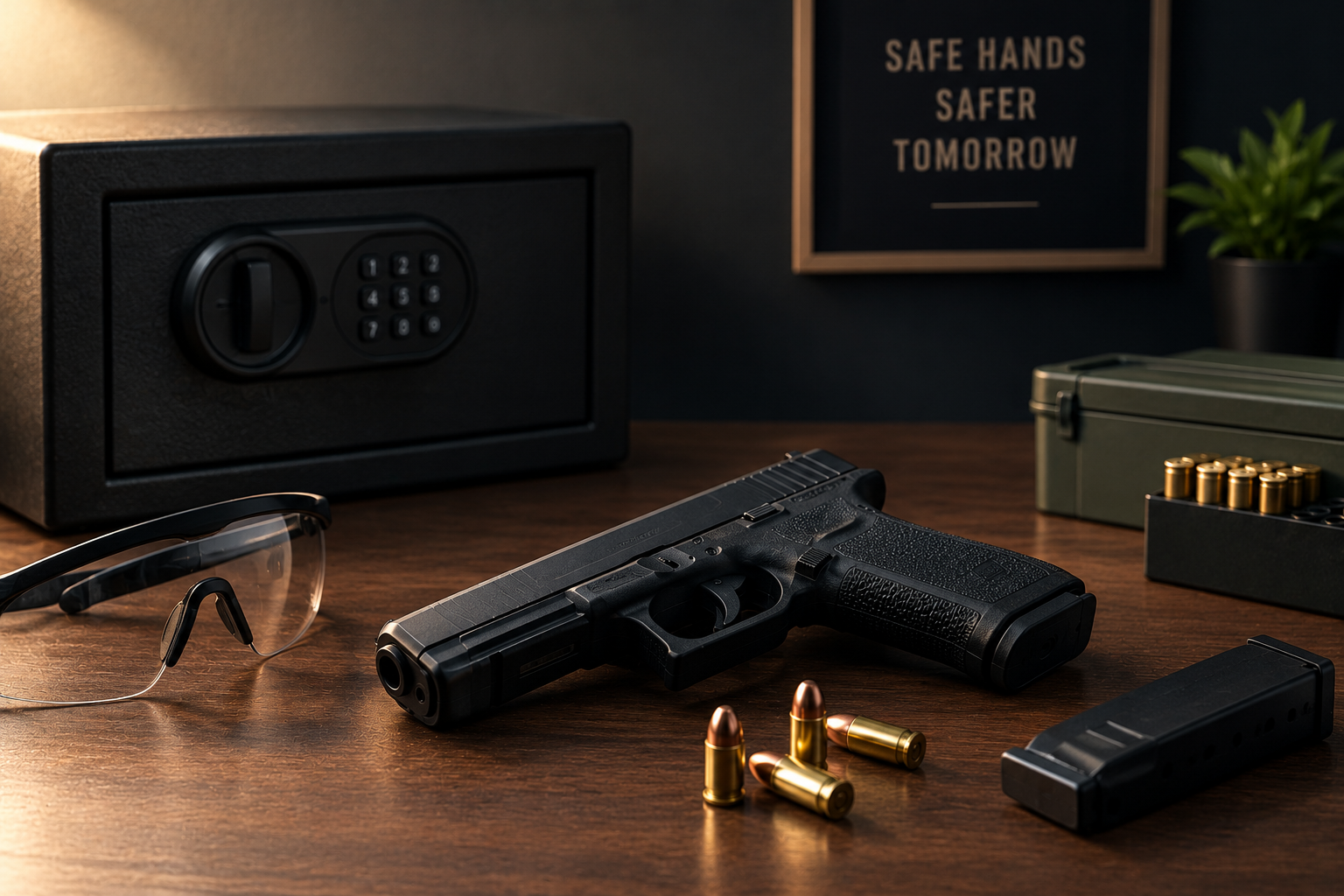
Introduction
Firearm safety remains one of the most important responsibilities associated with owning, possessing, or handling a gun. In 2026, responsible firearm ownership involves much more than understanding how a firearm operates. It requires consistent safety practices, secure storage, proper education, awareness of applicable laws, and a commitment to protecting family members and the wider community. Whether someone owns a firearm for sporting activities, hunting, collecting, or another lawful purpose, safety must always come first.
A firearm can cause serious injury or death if handled carelessly, stored improperly, or accessed by an unauthorized person. Many preventable incidents occur when individuals become overconfident, assume a firearm is unloaded, or overlook basic precautions. Establishing a safety-first mindset helps reduce these risks and encourages responsible behavior. The essential principles discussed in this guide explain how firearm owners can approach safety thoughtfully and maintain responsible habits throughout 2026 and beyond.
Explore More: Click Here
1. Always Treat Every Firearm as Loaded
One of the most fundamental firearm safety principles is to treat every firearm as though it is loaded, even when someone tells you otherwise. Never assume that a firearm is unloaded because its owner says it is empty, its magazine has been removed, or it has been sitting unused for an extended period.
This approach creates a consistent safety mindset and reduces the possibility of dangerous mistakes. Whenever a firearm is handled, the person responsible should follow the manufacturer’s instructions for safely verifying its condition. If there is uncertainty about its condition or operation, stop handling it and seek assistance from a qualified firearms instructor or other appropriately trained professional.
A firearm’s condition should never be determined through guesswork. Even experienced owners must follow established precautions every time they handle a firearm. Familiarity can sometimes lead to complacency, making consistent safety practices especially important.
2. Always Keep the Muzzle Pointed in a Safe Direction
The direction in which a firearm is pointed is another essential consideration. Always keep the muzzle directed toward a safe area where an accidental discharge would be unlikely to injure someone. Never point a firearm toward another person, an animal, or an area where people could be present.
A safe direction depends on the surroundings. Walls, floors, ceilings, and other barriers should not automatically be considered safe because a projectile may penetrate some materials or travel beyond them. Understanding the environment is therefore essential whenever a firearm is handled.
This principle applies whether the firearm is believed to be loaded or unloaded. It also applies during transportation, cleaning, inspection, and storage preparation. Maintaining muzzle awareness consistently provides an additional layer of protection against accidental injury.
Learn More: Link Here
3. Keep Your Finger Away From the Trigger
Another essential safety rule is to keep your finger outside the trigger guard until you are ready to fire at a lawful target in an appropriate environment. Resting a finger on the trigger unnecessarily can increase the risk of an unintended discharge.
Unexpected movements, slips, distractions, or sudden reactions can cause a person to apply pressure to a trigger without intending to do so. Keeping the trigger finger straight and away from the trigger helps prevent this type of mistake.
This rule should become an automatic habit rather than something remembered only at a shooting range. Whether picking up a firearm, moving it, inspecting it, or preparing it for secure storage, maintaining proper trigger discipline is a basic responsibility.
4. Identify Your Target and Understand What Lies Beyond It
Responsible firearm use requires awareness of the target and the surrounding environment. Never discharge a firearm at something you cannot positively identify. Mistaking a person, animal, or object for a lawful target can result in devastating consequences.
It is equally important to consider what lies beyond the intended target. A projectile may pass through an object, travel farther than expected, or strike a surface and change direction. An apparently empty area may also contain people, buildings, roads, or other hazards outside the shooter’s immediate field of vision.
These considerations are particularly important during lawful hunting and recreational shooting. Weather, lighting, visibility, and movement can change environmental conditions quickly. If there is any uncertainty about the target or the surrounding area, do not fire.
5. Store Firearms Securely When Not in Use
Secure storage is one of the most important responsibilities of firearm ownership. When a firearm is not being used, it should generally be stored unloaded in a locked safe, secure cabinet, or suitable lockable container. A compatible firearm locking device can provide an additional layer of protection.
The purpose of secure storage is to prevent unauthorized access, reduce the risk of accidents, and protect firearms from theft. Hiding a firearm in a drawer, under a mattress, or on a high shelf is not a substitute for locking it securely. Children, visitors, and other household members may discover locations that an owner assumes are private.
Choose storage arrangements that reflect the firearm owner’s household circumstances, applicable laws, and security needs. Keep keys, combinations, and access credentials away from children and anyone who should not handle the firearm. Regularly check that locks and storage equipment remain functional.
Explore More: Click Here
6. Keep Ammunition Secure and Separate
A responsible storage plan should address ammunition as well as firearms. When a firearm is not in use, keep it unloaded and secure ammunition separately in a locked location whenever possible and consistent with applicable regulations.
This arrangement creates an additional barrier against unauthorized use. It can be particularly important in homes where children, teenagers, guests, or individuals unfamiliar with firearm safety may be present.
Ammunition should also be stored according to the manufacturer’s recommendations. Protect it from unsuitable temperatures, excessive moisture, physical damage, and other conditions that could affect its reliability or safety. Do not use ammunition that appears damaged or whose suitability is uncertain. Consult the manufacturer or a qualified professional for guidance.
7. Educate Children and Household Members
Firearm safety is a household responsibility, even when only one person owns a firearm. Anyone living in or regularly visiting a home where firearms are present should understand the importance of secure storage and the boundaries surrounding firearm access.
Children should receive age-appropriate safety education. Teach them never to touch a firearm they discover, never to play with it, and to leave the area and immediately tell a trusted adult. These instructions are valuable, but they must never replace secure storage. Children should not be expected to manage the risks created by an accessible firearm.
Parents and guardians should also communicate with other families when appropriate, particularly before children visit homes where firearms may be present. Asking whether firearms are securely stored can help adults make informed decisions about their children’s safety.
8. Never Handle Firearms Under the Influence
Alcohol, recreational drugs, and certain medications can impair judgment, concentration, coordination, and reaction time. These effects can make handling a firearm substantially more dangerous, even for someone who has considerable experience.
Never handle or discharge a firearm while under the influence of alcohol or drugs. If a prescribed medication causes drowsiness, dizziness, or other effects that may interfere with safe handling, consult a healthcare professional and avoid firearm-related activities until it is safe to do so.
Emotional distress also deserves attention. Anger, extreme frustration, panic, or a personal crisis may affect decision-making. If you are emotionally overwhelmed, leave the firearm secured and postpone handling it until you can act calmly and responsibly.
Learn More: Link Here
9. Complete Firearm Safety Training
Reading safety information is useful, but practical education from a qualified instructor can provide a stronger foundation. A reputable training course can help owners understand firearm responsibilities, recognize hazards, learn safe handling practices, and become familiar with relevant legal requirements.
Training should be appropriate for the firearm, the owner’s experience level, and the intended lawful activity. Beginners should avoid handling unfamiliar firearms without competent supervision. Experienced owners can also benefit from refresher courses because safe habits require ongoing attention.
Choose instructors and training providers with appropriate qualifications and a strong emphasis on safety. Ask about the course curriculum, safety procedures, and any prerequisites before enrolling. Education should reinforce careful decision-making rather than encourage overconfidence.
10. Use Appropriate Eye and Hearing Protection
Firing a gun can expose a person to intense noise, flying debris, hot gases, and other hazards. Appropriate eye and hearing protection are essential whenever participating in activities that involve firearm discharge.
Use properly fitted protective equipment suitable for the environment and the activity. Hearing damage can occur even when the sound of a gunshot lasts only a fraction of a second. Eye protection can help reduce the risk of injury from particles or debris.
Follow the range’s safety rules and the recommendations of qualified instructors. Do not assume that standing farther away from another shooter eliminates the need for protection. Everyone in an area where firearms are discharged should understand the relevant risks and follow the facility’s requirements.
11. Inspect and Maintain Firearms Responsibly
A firearm should be kept in a safe, serviceable condition according to the manufacturer’s instructions. Damage, excessive wear, corrosion, or other problems can create safety concerns. Owners should familiarize themselves with the documentation supplied for their particular firearm and follow the recommended inspection and maintenance schedule.
Before performing any maintenance, follow the manufacturer’s safety instructions and verify that the firearm is unloaded. Keep the muzzle pointed in a safe direction and your finger outside the trigger guard. Work in an appropriate area, free from distractions, and keep ammunition away from the maintenance workspace.
If a firearm appears damaged, malfunctions, or behaves unexpectedly, stop using it. Do not attempt repairs beyond your training or the manufacturer’s guidance. Consult a qualified gunsmith or authorized service provider when professional attention is needed.
12. Understand Local Laws and Legal Responsibilities
Firearm laws differ considerably between countries, states, and local jurisdictions. Requirements may cover licensing, ownership eligibility, registration, transportation, storage, ammunition, hunting, and the circumstances under which a firearm may legally be used.
In 2026, owners should verify the current requirements that apply to their specific location rather than relying on outdated online discussions or advice from acquaintances. A firearm that can be legally possessed in one jurisdiction may be restricted or prohibited in another.
In India, for example, firearm ownership and licensing are governed by applicable Indian firearms legislation and related rules. Individuals should consult the relevant government authorities and current legal requirements before acquiring, possessing, transporting, or using a firearm. Readers in other countries should consult their own official legal sources.
Explore More: Click Here
13. Transport Firearms Carefully and Legally
Transporting a firearm introduces risks that require additional planning. Before travelling, confirm the legal requirements that apply to the route, destination, and method of transportation. Requirements may differ between jurisdictions and may depend on the firearm’s classification and the reason for the journey.
Unless a specific lawful situation requires otherwise, firearms should be unloaded and secured in an appropriate locked case during transportation. Keep them out of public view and prevent unauthorized access. Do not assume that a locked vehicle alone provides adequate security.
Never leave a firearm unsecured in a vehicle for convenience. Vehicle theft can result in firearms entering unauthorized hands. If temporary storage is unavoidable, use an appropriate secure locking container, minimize the time the firearm remains in the vehicle, and follow all applicable laws and safety recommendations.
14. Follow Range Rules and Respect Other Shooters
A properly managed shooting range provides an environment where people can practice lawful shooting activities under established safety procedures. Every participant should understand the range’s rules before handling a firearm and follow all instructions from the range safety officer.
Pay attention to designated firing areas, ceasefire commands, equipment requirements, and restrictions on handling firearms away from authorized positions. Never handle a firearm when the range has declared a ceasefire or when doing so would violate the facility’s procedures.
Respect for other participants is equally important. Avoid distracting people who are handling firearms, follow instructions promptly, and communicate safety concerns clearly. If you observe an unsafe situation, alert the responsible range official instead of creating additional risks by intervening improperly.
15. Recognize Unsafe Firearm Behavior
Responsible ownership includes recognizing situations in which a firearm should not be handled. Examples include inadequate supervision, uncertainty about a firearm’s condition, unsafe storage, unfamiliar equipment, and environments where other people may be exposed to danger.
Do not allow social pressure or overconfidence to influence your decisions. If someone ignores basic safety rules, points a firearm carelessly, or appears impaired, distance yourself from the situation and seek help from an appropriate authority when necessary.
Firearm safety also requires knowing when to stop. If you are uncertain about a firearm, its operation, or the legality of a proposed activity, do not proceed until the issue has been resolved by a qualified professional or the relevant authority.
16. Prepare for Emergencies and Unexpected Situations
Although careful practices can reduce risks, firearm owners should know how to respond if an incident occurs. In the event of an accidental discharge or suspected injury, prioritize human safety and contact emergency services immediately when needed.
Do not handle a firearm unnecessarily while responding to an emergency. Keep other people away from the immediate danger and follow the instructions of emergency responders. If a firearm malfunctions or its condition is uncertain, avoid improvising a solution that could create further hazards.
Owners should also consider what would happen if a household member experienced a serious emotional crisis. In such circumstances, securing firearms so that the person cannot access them may be an important precaution. Seek appropriate professional support and follow guidance from relevant health or emergency services.
Learn More: Link Here
17. Build a Consistent Firearm Safety Routine
Safety becomes more reliable when it is part of a consistent routine. Owners should avoid rushing, multitasking, or handling firearms when distracted. Establishing clear expectations for handling, storage, transportation, and maintenance can help reduce preventable errors.
Review your safety practices periodically. Check storage security, confirm that household members understand the relevant rules, replace damaged safety equipment, and ensure that your knowledge of applicable laws remains current. If your household circumstances change, reconsider whether your existing storage arrangements remain appropriate.
A written safety plan can also help clarify responsibilities. It may identify who is authorized to access storage, how unauthorized access will be prevented, and whom to contact when professional assistance is required. Such planning reinforces the principle that firearm safety is an ongoing commitment rather than a one-time task.
Frequently Asked Questions
What are the most important firearm safety rules?
The most important principles include treating every firearm as loaded, keeping the muzzle pointed in a safe direction, keeping your finger outside the trigger guard until ready to fire, identifying the target and what lies beyond it, and storing firearms securely when not in use.
How should firearms be stored safely at home?
A widely recommended approach is to store firearms unloaded in a locked safe, cabinet, or suitable secure container. Keep ammunition locked separately where possible, and ensure children and unauthorized individuals cannot access the firearm, ammunition, keys, or combinations. Follow local legal requirements and manufacturer recommendations.
Should firearm owners take safety training?
Yes. Training from a qualified instructor helps owners understand safe handling, storage, maintenance, and legal responsibilities. Refresher courses can also help experienced owners reinforce good habits and address changes in safety guidance.
Is it safe to handle a firearm after drinking alcohol?
No. Alcohol can impair judgment, coordination, and reaction time. Firearms should not be handled or discharged under the influence of alcohol or other impairing substances.
What should I do if I find an unattended firearm?
Do not touch or attempt to handle it. Keep your distance, prevent others from approaching if you can do so safely, and notify a responsible adult or appropriate authority. If there is an immediate danger, contact emergency services.
Are firearm safety laws the same everywhere?
No. Laws vary between countries and jurisdictions and may cover licensing, possession, storage, transportation, and use. Always consult current official sources for the location in which you intend to possess or use a firearm.
Conclusion
Firearm safety in 2026 depends on consistent habits, responsible decision-making, proper education, and respect for the risks associated with firearm ownership. Treating every firearm as loaded, maintaining muzzle and trigger discipline, securing firearms and ammunition, educating household members, and following applicable laws are essential foundations of responsible ownership.
No single precaution can eliminate every risk. The strongest approach combines multiple safeguards, regular training, secure storage, and a willingness to stop whenever a situation becomes uncertain or unsafe. Responsible firearm ownership is not simply about knowing how a firearm works; it is about preventing unauthorized access, protecting other people, and understanding the serious consequences of careless handling.
By making safety a priority every day, firearm owners can help reduce preventable incidents and contribute to safer homes and communities. The most important rule is simple: never compromise safety for convenience, confidence, or speed.
Safety Disclaimer: This article is intended for general educational purposes and does not replace professional firearms safety training, manufacturer instructions, legal advice, or official government guidance. Firearm laws and storage requirements vary by jurisdiction. Always follow applicable laws and consult qualified professionals when necessary.