Introduction
Online education has become an important part of professional development, helping students, working professionals, entrepreneurs, and career changers acquire new skills without committing to traditional classroom-based learning. Whether you want to learn programming, understand artificial intelligence, improve your business knowledge, or develop leadership abilities, online learning platforms offer flexible ways to achieve your goals.
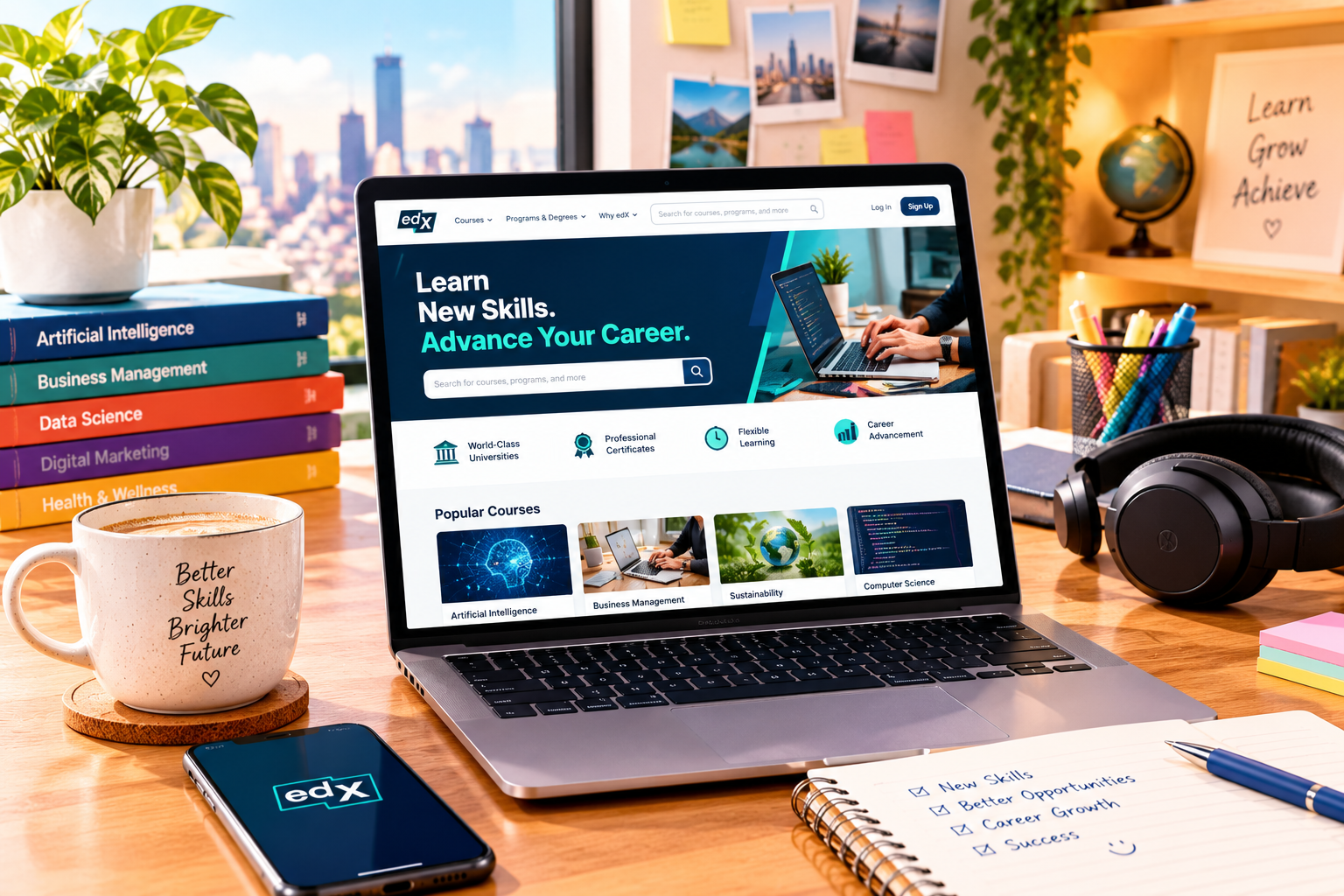
One platform that continues to attract learners worldwide is edX, an online education provider offering courses and professional development programs from universities and industry organizations. Through edX, learners can explore subjects such as computer science, data science, business management, healthcare, engineering, and the humanities.
In this edX Review 2026, we will examine the platform’s key features, popular online courses, professional certificates, pricing structure, advantages, limitations, and career development opportunities. We will also explain who should consider edX and how to choose courses that match individual learning goals.
If you are ready to explore online learning opportunities, Click Here to discover available educational programs and learning resources.
What Is edX?
edX is an online learning platform that partners with universities and organizations to provide educational opportunities to learners around the world. It offers individual courses, professional certificate programs, executive education, and other structured learning pathways designed for different academic and professional needs.
The platform allows learners to study subjects ranging from introductory topics to advanced technical and business disciplines. Depending on the course, learning materials may include video lectures, written lessons, practical assignments, assessments, and discussion activities. Many courses are available online, making it possible to learn from home or alongside a full-time job.
One of edX’s distinguishing features is its academic partnerships. Learners can find educational programs associated with institutions such as Harvard University, the Massachusetts Institute of Technology, and the Georgia Institute of Technology, as well as industry organizations that provide career-focused training.
Link Here to explore edX and find courses that suit your educational background and professional ambitions.
Key Features of edX in 2026
1. Courses From Leading Universities
One of the platform’s biggest attractions is access to courses developed by established universities and educational organizations. These partnerships give learners opportunities to study subjects that might otherwise require enrollment in a university-based program.
Course topics cover computer science, mathematics, economics, business, healthcare, engineering, environmental studies, and many other disciplines.
For example, someone interested in programming can explore introductory computer science courses, while a business professional might choose courses in leadership, management, or strategic decision-making.
The quality and format of instruction vary by course, so prospective learners should review the syllabus, instructor information, prerequisites, and assessment requirements before enrolling.
2. Flexible Online Learning
Flexibility is another major benefit of edX. Many courses are self-paced, allowing learners to organize their studies around work, family responsibilities, and other commitments.
This flexibility can be particularly useful for employees who want to develop new skills without leaving their jobs. University students can also supplement their existing education with additional coursework.
However, not every course follows the same schedule. Some programs include fixed deadlines, instructor-led sessions, or specific completion periods. Checking the course schedule before enrolling can help prevent unnecessary pressure later.
Click Here to explore flexible learning opportunities through edX.
3. Verified Course Certificates
Many edX courses offer verified certificates to learners who enroll in the paid certificate track and satisfy the course requirements.
These certificates can help demonstrate that a learner has completed a particular educational program. Depending on the course, they may include the name of the issuing institution and a verification link.
Learners can add relevant certificates to their résumés, professional portfolios, and LinkedIn profiles. They may also use them to document continuing education or demonstrate an interest in a specific subject.
It is important to understand that a course certificate is not automatically equivalent to a university degree, a professional license, or an industry certification. Its value depends on the issuing institution, the subject, the learner’s abilities, and the expectations of employers.
4. Professional Certificate Programs
Professional Certificate programs are designed for people who want to develop expertise in a particular professional field through a structured sequence of courses.
Rather than focusing on a single topic, these programs combine related learning experiences to help learners build broader knowledge and practical skills.
For example, a professional certificate in data science may cover programming, statistics, data analysis, and related technical concepts. A business-focused program might concentrate on leadership, communication, management, or strategic planning.
According to edX’s published program information, many Professional Certificate programs take approximately two to ten months to complete, depending on their structure and the learner’s pace.
Link Here to find professional learning programs that align with your career goals.
Best Online Courses to Explore on edX in 2026
The best course depends on your experience, interests, and professional objectives. Here are several subject areas worth exploring.
1. Computer Science and Programming
Computer science remains a valuable learning area for students, aspiring developers, and professionals interested in technology.
edX offers courses covering programming fundamentals, algorithms, software development, and computer science principles. Learners can begin with introductory material before progressing to more challenging subjects.
Harvard’s computer science offerings are worth exploring for learners interested in foundational programming and computational thinking. Georgia Tech also offers programming-focused Professional Certificate programs.
These courses can help learners understand programming concepts, improve problem-solving skills, and prepare for more advanced technical study.
However, completing an online course alone does not guarantee employment as a software developer. Building projects, practicing coding, and developing a portfolio are important complementary activities.
2. Data Science and Data Analytics
Data science and analytics are useful across industries, including finance, healthcare, retail, marketing, and technology.
Courses in this area may cover statistical analysis, data visualization, programming, data interpretation, and machine learning fundamentals.
Learners who are new to the field can begin with introductory data analysis or Python courses. More experienced learners may prefer programs that explore advanced analytics and predictive modeling.
These skills can support career paths such as data analyst, business intelligence analyst, research assistant, and data science specialist, depending on the learner’s overall qualifications and experience.
Click Here to explore data science and analytics courses.
3. Artificial Intelligence and Machine Learning
Artificial intelligence has become an important subject for technology professionals, business leaders, researchers, and students.
edX provides learning opportunities covering AI fundamentals, machine learning, computer science, and the practical implications of AI technologies.
Beginners can start with introductory courses that explain how AI systems work and where they are used. Learners with programming experience may prefer more technical courses involving algorithms, model development, and machine learning applications.
Business professionals can also investigate courses focused on AI strategy, implementation, and responsible use.
When choosing an AI course, check whether it includes hands-on exercises and practical projects. Understanding concepts is important, but the ability to apply them is often essential for professional development.
4. Business Management and Leadership
Business and leadership courses can benefit managers, entrepreneurs, team leaders, and professionals preparing for more senior responsibilities.
Topics may include organizational management, strategic planning, communication, decision-making, and business operations.
Learners who want to improve their leadership abilities can explore programs offered by recognized universities and business schools.
These courses can help participants understand management frameworks and develop a more structured approach to workplace challenges.
However, leadership development also requires practical experience, communication with colleagues, and the ability to apply new concepts in real situations.
5. Cybersecurity and Information Technology
Cybersecurity and IT courses can help learners understand digital security, risk management, computer systems, and technology operations.
Depending on the program, learners may study network security, information security principles, risk assessment, or cybersecurity strategy.
Beginners should look for courses that explain foundational concepts before moving to specialized technical material.
People pursuing IT or cybersecurity careers should also investigate the specific qualifications, practical experience, and industry certifications expected by employers in their target roles.
Link Here to discover more technology and professional development courses.
Understanding edX Professional Certificates
Professional certificates are particularly relevant to learners who want a structured learning pathway rather than a single standalone course.
These programs generally combine several courses around a specific skill area. Completing the required courses can lead to a program certificate issued by the participating university or organization.
Who Should Consider Professional Certificates?
Professional certificates may be suitable for:
- Students seeking additional knowledge alongside their academic studies.
- Working professionals who want to improve existing skills.
- Career changers exploring a new industry.
- Entrepreneurs developing business or technical capabilities.
- Employees preparing for new responsibilities.
- Professionals interested in continuing education.
For example, a marketing professional could explore analytics courses to improve their understanding of campaign performance. An administrator might study project management, while an aspiring developer could pursue programming courses.
Before enrolling, examine the program’s syllabus, prerequisites, total cost, and expected workload. It is also worth checking whether the curriculum matches the skills mentioned in job descriptions for your target role.
Are Professional Certificates Recognized by Employers?
Recognition varies depending on the certificate, institution, employer, and position.
A certificate issued through a recognized university or industry organization may help demonstrate commitment to learning and familiarity with a particular subject. Nevertheless, employers typically evaluate several factors, including relevant experience, technical ability, educational background, and interview performance.
A certificate is most useful when it supports demonstrable skills. Combining coursework with practical projects and relevant work experience can make your professional profile stronger.
Click Here to compare available Professional Certificate programs.
edX Pricing: Free Courses and Paid Certificates
One of the most appealing aspects of edX is that many courses provide a way to explore learning materials without immediately paying for a certificate.
Free Learning Options
Many courses offer a free audit option, which generally allows learners to access course materials for a limited period or under specific conditions.
This option can be useful if you want to explore a topic before committing financially.
However, free access may not include every feature. Graded assessments, unlimited access, or a verified certificate may require a paid enrollment option. Availability varies by course.
Paid Verified Certificates
Learners who want a certificate can usually select the verified track when available.
The price depends on the course, institution, and program. Individual courses and multi-course certificates have different pricing structures, so there is no single fee that applies to all edX learning opportunities.
Before paying, check exactly what the enrollment includes, whether financial assistance is available, and the deadline for completing the course.
Are Paid Programs Worth the Money?
Paid programs may be worthwhile when they provide relevant instruction, credible assessment, and a certificate that supports your goals.
For example, a professional who needs structured training in data analytics may benefit from a multi-course program more than from several unrelated introductory courses.
However, paying for a certificate does not automatically improve employment prospects. The return on investment depends on how well the course fits your objectives and how effectively you apply what you learn.
Link Here to review available courses and compare their enrollment options.
Career Development Opportunities Through edX
Online learning can support professional development in several ways, although individual outcomes depend on effort, experience, and the needs of the job market.
1. Improving Existing Skills
Professionals can use edX to strengthen skills they already use at work.
For instance, a business analyst might study advanced data analysis, while a team leader could explore organizational leadership or project management.
Targeted learning can help employees improve their performance and prepare for responsibilities that require additional knowledge.
2. Exploring a Career Change
People considering a new career can use introductory courses to understand unfamiliar industries before investing in extensive training.
Someone interested in software development, for example, can begin with programming fundamentals and gradually progress to more specialized material.
This approach helps learners assess their interests and identify the additional qualifications they may need.
3. Strengthening a Résumé
Relevant certificates can demonstrate continued learning and help explain how a candidate has developed new skills.
When adding a certificate to your résumé, include the program name, issuing institution, and completion date when appropriate. You can also describe relevant projects or assignments completed during the course.
Focus on achievements and abilities rather than collecting certificates without a clear purpose.
4. Supporting Professional Networking
Sharing educational achievements through professional platforms can help communicate your interests and learning progress.
Course discussion spaces and collaborative activities, when available, may also expose learners to different perspectives.
Nevertheless, networking opportunities vary by course. Learners should not assume that every program provides direct access to recruiters or employment opportunities.
Click Here to explore career-focused learning opportunities on edX.
Advantages of edX
Several benefits make edX worth considering for online education.
Access to university-level learning: Learners can explore courses associated with recognized universities and educational organizations.
Flexible study options: Many courses allow participants to study around work, family responsibilities, and other commitments.
Broad subject selection: Courses cover technical, business, academic, and personal development topics.
Free learning opportunities: Many courses provide an audit option, allowing learners to explore content before purchasing a certificate.
Structured professional programs: Multi-course certificates can help learners develop expertise in a focused subject area.
Portable credentials: Verified certificates can generally be shared digitally and included in professional profiles.
Self-directed development: Learners can choose courses according to their experience, interests, and future objectives.
These advantages make edX useful for people who want to continue learning without necessarily enrolling in a traditional degree program.
Disadvantages of edX
Despite its benefits, edX has limitations that learners should understand before enrolling.
1. Certificates May Cost Money
Although many courses offer free audit options, verified certificates and professional programs usually require payment.
Learners should compare the total cost with other available training options before purchasing a course.
2. Self-Discipline Is Essential
Flexible learning requires consistent effort. Without a regular study schedule, learners may struggle to complete assignments or finish a program.
Setting weekly goals and allocating dedicated study time can help improve completion rates.
3. Some Courses Are Academically Challenging
Courses developed by universities may include demanding assignments, technical terminology, and assessments.
Beginners should review prerequisites carefully and select courses that match their current knowledge.
4. Employment Is Not Guaranteed
Completing a course or certificate does not guarantee a job, promotion, or salary increase.
Employers may require degrees, professional experience, technical assessments, or industry-specific qualifications in addition to online learning.
5. Course Experiences Differ
Teaching styles, assessment methods, support arrangements, and workloads vary across programs.
Reading the course description and reviewing the syllabus before enrolling can help learners select an appropriate option.
Link Here to compare courses and determine which options best suit your learning needs.
edX vs. Other Online Learning Platforms
When comparing edX with other online learning providers, consider your preferred teaching style, budget, and career goals.
Some platforms emphasize short, practical tutorials, while others focus on academic instruction, professional certificates, or structured degree pathways.
edX is particularly worth considering if you prefer university-associated learning and want to explore a broad selection of academic and professional subjects.
However, the best platform depends on the specific course rather than the brand alone.
Before making a decision, compare the following factors:
- Course quality: Does the curriculum cover the skills you need?
- Instructor background: Who developed and teaches the course?
- Practical experience: Are there projects, assignments, or hands-on exercises?
- Certificate value: Who issues the credential, and is it relevant to your goals?
- Price: Does the course offer sufficient value for its cost?
- Flexibility: Can you complete the program within your available time?
- Support: What assistance is available if you encounter difficulties?
Comparing individual programs using these criteria is more useful than assuming one platform is always better than another.
How to Choose the Right edX Course
Choosing the right course can make the difference between completing a meaningful learning experience and spending time on material that does not meet your needs.
Step 1: Define Your Objective
Decide whether you want to learn a new skill, improve your current performance, explore a career change, or pursue academic interests.
A specific objective makes it easier to narrow down your options.
Step 2: Review the Curriculum
Read the course description, syllabus, learning outcomes, and assessment requirements.
Check whether the course covers the topics you need and whether it assumes previous knowledge.
Step 3: Check the Time Commitment
Review the estimated duration and weekly workload.
Choose a program that fits your schedule, especially if you are balancing education with a full-time job.
Step 4: Compare Costs
Determine whether the free audit option meets your needs or whether you require a verified certificate.
For a multi-course program, compare the total cost with the value of the complete learning pathway.
Step 5: Apply What You Learn
Whenever possible, build a portfolio project, solve a practical problem, or apply new knowledge to your current job.
Practical application helps turn educational content into demonstrable skills.
Click Here to start exploring courses that align with your personal and professional goals.
Is edX Worth It in 2026?
For many learners, edX can be a worthwhile option for developing knowledge and improving professional skills.
Students can use the platform to supplement their education, while working professionals can explore new subjects without leaving their jobs. Career changers may also benefit from introductory courses that help them evaluate a potential new direction.
The platform is especially appealing to learners who value university-associated instruction, flexible study options, and structured certificate programs.
However, the value of edX depends on choosing the right course and applying the knowledge gained. A certificate that does not address your career needs may have limited practical value, even if the course itself is well designed.
Before enrolling in an expensive program, review the curriculum, investigate employer expectations, and consider whether a free course can help you determine if the subject is right for you.
Frequently Asked Questions About edX
1. Is edX free to use?
Many edX courses offer free audit access, although certificates and certain learning features generally require payment. Availability and access conditions vary by course.
2. Does edX provide certificates?
Yes. Many courses and programs offer certificates to learners who complete the required coursework through the appropriate paid enrollment option.
3. Are edX certificates valuable for careers?
They can demonstrate subject knowledge and a commitment to professional development. Their value depends on the employer, credential, skills acquired, and relevance to the position.
4. Can beginners use edX?
Yes. Many introductory courses are designed for beginners, although some advanced courses require previous knowledge or technical experience.
5. Does edX offer programming courses?
Yes. Learners can explore programming, computer science, Python, algorithms, and related technical subjects.
6. Can I study on edX while working full-time?
Many courses offer flexible or self-paced study options, making them suitable for working professionals. However, some programs follow fixed schedules.
7. How long do edX courses take?
Course duration varies. Individual courses may take several weeks, while multi-course professional programs can take several months.
8. Are edX certificates equivalent to degrees?
No. A course certificate generally demonstrates completion of a particular learning experience and is not equivalent to a full undergraduate or graduate degree.
9. Can edX help me change careers?
It can help you explore a field and develop relevant knowledge. A successful career transition may also require experience, practical projects, and additional qualifications.
10. How should I choose an edX course?
Identify your goal, review the syllabus, check prerequisites, compare prices, and make sure the expected workload fits your schedule.
Link Here to explore available learning programs and find answers to additional course-related questions.
Final Verdict
edX is a strong option for learners seeking flexible online education, university-associated courses, and structured professional development opportunities in 2026. Its selection of subjects, range of learning formats, and certificate pathways make it suitable for students, working professionals, entrepreneurs, and people exploring new career directions.
The platform can be particularly useful for learning programming, data science, artificial intelligence, business management, and other professional subjects. Free audit options also allow many learners to explore educational content before deciding whether to pay for a verified certificate.
Nevertheless, learners should remember that online courses are only one part of career development. Practical experience, a portfolio of relevant work, communication skills, and appropriate qualifications remain important in many industries.
Overall, edX is worth exploring if you have a clear learning objective and are prepared to invest the time required to complete a course. By comparing programs carefully and applying what you learn, you can use online education to strengthen your knowledge and support your long-term professional growth.
Ready to take the next step in your learning journey? Click Here to explore edX courses and professional development opportunities.