Introduction
Video content has become one of the most effective ways to communicate, educate, entertain, and promote products online. From YouTube videos and Instagram Reels to business presentations and online courses, creators increasingly rely on video to reach their audiences. However, producing professional-looking videos can be challenging when traditional editing software requires technical knowledge, powerful hardware, and considerable time. This is where VEED comes into the picture.
VEED is an online video editing and AI-powered content creation platform designed to simplify video production. It allows users to edit footage, generate subtitles, improve audio, create AI-assisted videos, and prepare content for different platforms directly through a web browser. Its combination of editing tools and artificial intelligence makes it an interesting option for beginners, social media creators, marketers, educators, and businesses looking for a convenient video production workflow.
Explore VEED’s video editing platform: Click Here
What Is VEED?
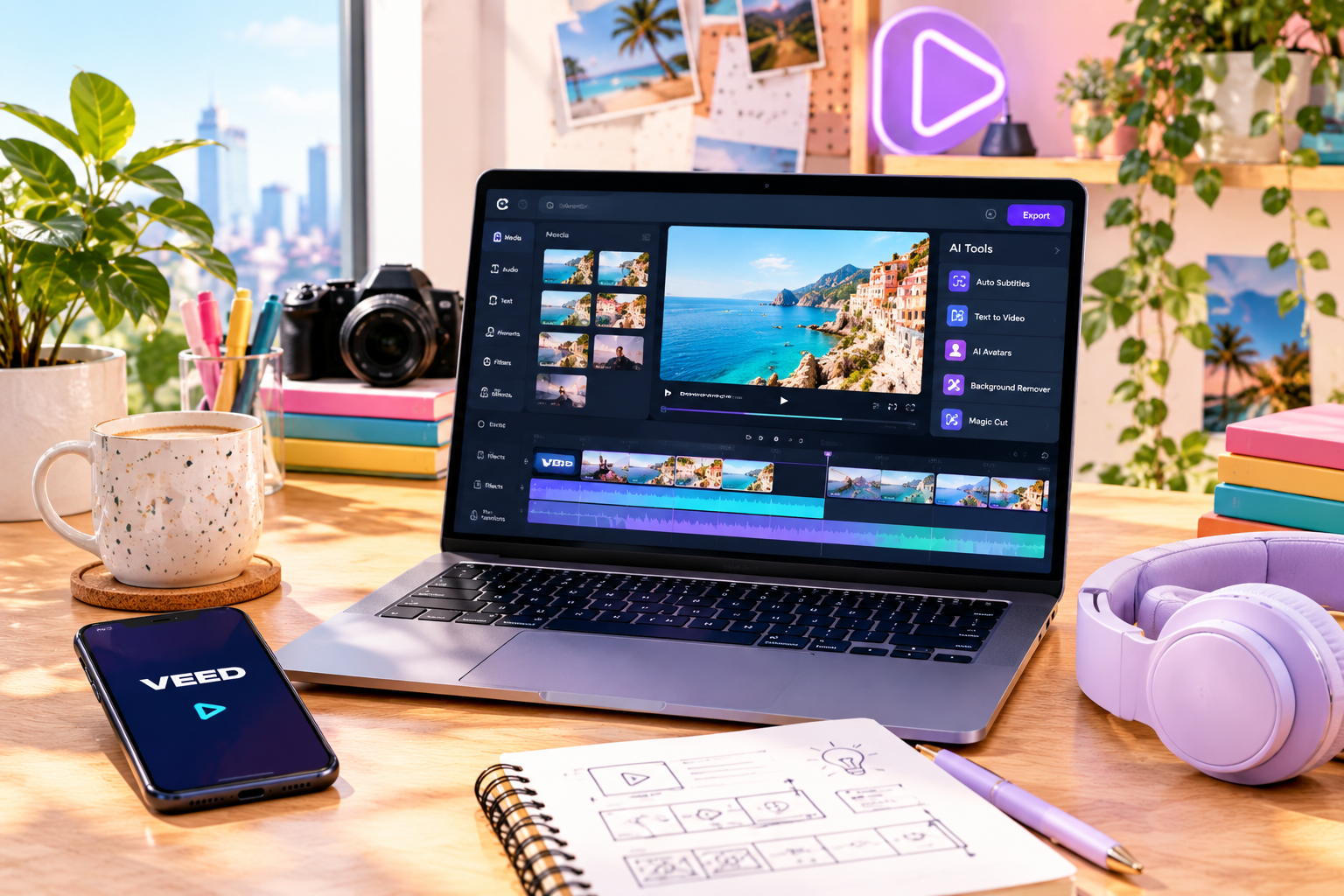
VEED is a browser-based video editing platform that combines conventional editing features with AI-powered tools. Instead of requiring users to install a large desktop application, the platform allows them to work on video projects online. Users can upload footage, arrange clips, add text, include music, generate subtitles, and make other adjustments through an accessible editing interface.
The platform is particularly useful for people who regularly produce digital content. YouTubers can prepare videos, businesses can create promotional materials, educators can develop instructional lessons, and social media managers can produce short-form content. VEED also offers AI tools that help automate selected production tasks, making it possible to reduce repetitive work and concentrate more on storytelling and creative decisions.
Discover VEED’s online editing tools: Link Here
Best VEED Features in 2026
1. Easy Online Video Editing
One of VEED’s primary advantages is its accessible editing experience. Users can upload video files and perform common editing tasks without learning a complicated professional editing interface. Basic functions include trimming clips, cropping footage, resizing videos, arranging scenes, adding text, and incorporating background music.
These capabilities are useful when preparing content for multiple platforms. For example, a creator might record a landscape video for YouTube and then adapt selected footage into a vertical video for Instagram Reels or TikTok. Instead of rebuilding the entire project from scratch, the creator can adjust the composition and make the necessary changes for each platform.
Try VEED’s editing features: Click Here
2. AI Video Generation
AI video generation is an important part of VEED’s expanding creative toolkit. Depending on the available model and subscription features, users can generate video clips from written prompts or animate images into moving footage. This can help creators develop visual material without recording every scene themselves.
For example, a marketer producing a travel campaign might generate supplementary footage illustrating a destination, while an educator could create visual material to accompany a lesson. Generated clips can also serve as background visuals, creative experiments, or supporting elements within a larger video project.
AI generation does have limitations. Results may not always match the original prompt, and details such as hands, facial expressions, object movement, and scene continuity can require additional work. Creators should review generated footage carefully before publishing it, particularly when accuracy and realism are important.
Explore VEED’s AI video tools: Link Here
3. Automatic Subtitles and Captions
Captions are valuable for accessibility, comprehension, and social media engagement. Many viewers watch videos without sound, especially when browsing on mobile devices. VEED offers automatic subtitle generation that can convert spoken words into on-screen captions.
After generating subtitles, users can review the transcription, correct mistakes, adjust timing, and customize the appearance. Depending on the editing options available, creators can select different styles, fonts, colors, and animations to make captions match their visual identity.
Automatic transcription is convenient, but it is not guaranteed to be perfect. Background noise, unfamiliar names, technical vocabulary, regional accents, and overlapping speakers can affect accuracy. Reviewing captions before exporting is therefore essential, especially for educational, professional, or informational videos.
Create captioned videos with VEED: Click Here
4. AI Audio Enhancement
Good audio is essential to a professional video. Even impressive visuals can lose their impact when viewers struggle to hear the speaker or become distracted by background noise. VEED includes audio-related tools designed to help creators improve recordings and produce clearer content.
Depending on the tools available to the account, users can remove unwanted background noise, improve voice clarity, adjust audio levels, and work with narration. These functions are particularly helpful for people recording tutorials, interviews, online classes, podcasts, and marketing videos in home or office environments.
Audio enhancement can reduce some common recording problems, but it cannot completely repair every poor-quality recording. Distorted audio, severe clipping, and speech overwhelmed by loud sounds may remain difficult to fix. Recording in a quiet environment and using a suitable microphone will still improve the final result.
Explore VEED’s audio editing options: Link Here
5. AI Avatars and Talking Videos
AI avatars provide another option for creating videos without appearing on camera. These tools can generate presenter-style videos in which a digital character delivers a script. Businesses may use this format for internal announcements, product explanations, training resources, and selected marketing materials.
For creators who feel uncomfortable recording themselves, avatar-based production can offer a convenient alternative. It can also help teams develop consistent presentation formats for recurring content. However, availability may depend on the user’s country, plan, and specific VEED feature.
It is important to remember that AI presenters are not appropriate for every situation. Personal storytelling, interviews, and content that depends on genuine human emotion may benefit more from real presenters. Creators should also disclose synthetic media where appropriate and ensure that any likeness or voice used has the necessary authorization.
Explore VEED’s AI-powered creation features: Click Here
6. Text-Based Video Editing
Editing video by working with a transcript can make certain tasks considerably easier. Instead of manually searching through a long recording to find unwanted speech, users can work with transcribed text and remove selected words or sections where the feature is supported.
This approach is especially valuable for interviews, webinars, presentations, and talking-head videos. A creator can remove unnecessary pauses, shorten repetitive explanations, or eliminate selected filler words without navigating the timeline for every edit.
Text-based editing can speed up routine production, although users should check the resulting video to ensure that cuts sound natural. Removing words too aggressively can create awkward transitions or interrupt the intended meaning. Reviewing the final sequence remains an important part of producing a polished video.
Try VEED’s editing workflow: Link Here
7. Background Removal and Visual Improvements
Background removal is useful when creators want to separate a person or object from the original environment. VEED provides background-removal functionality that can help users replace distracting surroundings with a different background or create a cleaner visual presentation.
This feature can be useful for product demonstrations, online presentations, educational videos, and social media content. A business can create a consistent visual setting for its videos, while a presenter can reduce the appearance of clutter in a recording.
The quality of background removal depends on factors such as lighting, contrast, movement, and the complexity of the scene. Hair, transparent objects, and fast movements can be challenging for automated systems. Users should inspect the result carefully and adjust their recording setup when necessary.
Explore VEED’s visual editing tools: Click Here
8. Video Translation and AI Dubbing
Creators who want to reach international audiences may benefit from translation and dubbing tools. VEED provides features for generating subtitles in different languages and working with translated audio, subject to the availability of the relevant tool and subscription.
For example, a company publishing an English-language tutorial might prepare translated subtitles for viewers who speak Hindi, Spanish, French, or another supported language. This can help make educational materials, product explanations, and promotional content accessible to a wider audience.
AI translation should not be treated as a substitute for careful language review. Technical expressions, cultural references, humor, and context-dependent phrases can be translated incorrectly. Businesses creating content for important markets should review translations for accuracy, clarity, and cultural suitability before publishing.
Discover VEED’s translation features: Link Here
How VEED Benefits Different Types of Creators
YouTubers and Independent Video Creators
YouTube creators often need to manage several production tasks, including editing footage, adding captions, improving audio, and preparing promotional clips. VEED brings many of these tasks into a single online workflow, helping creators reduce the need to switch between different applications.
Its subtitle generation and text-based editing features can be especially useful for talking-head videos, tutorials, commentary, interviews, and educational content. Creators can also use templates and visual elements to maintain a consistent presentation style.
However, creators producing complex documentaries, cinematic projects, or highly detailed visual effects may still prefer advanced desktop editing software. VEED is best evaluated according to the complexity of the projects being produced.
Start creating videos with VEED: Click Here
Instagram, TikTok, and Short-Form Video Creators
Short-form content depends on clear messaging, strong openings, readable captions, and appropriate formatting. VEED can help creators turn existing footage into shorter clips, resize videos for different platforms, and add subtitles or visual elements.
For example, a creator recording a ten-minute tutorial could extract several useful sections and adapt them into short educational videos. A business could also turn product demonstrations into multiple social media posts, each highlighting a different benefit.
The key advantage is the opportunity to reuse existing material efficiently. Nevertheless, creators should customize each video for its intended platform rather than simply uploading the same clip everywhere. Different audiences may respond to different pacing, formats, captions, and calls to action.
Explore VEED for social media videos: Link Here
Businesses and Marketing Teams
Businesses use video for product launches, advertising campaigns, customer education, recruitment, and internal communication. VEED can help marketing teams produce these materials without building every project around a traditional video production process.
Branding features can support a consistent appearance across videos through reusable visual styles, logos, fonts, and colors where available. Teams can also benefit from a workflow that combines editing, subtitles, audio improvements, and selected AI-assisted production features.
For smaller businesses, this can make regular video production more manageable. Larger organizations should also consider administration, collaboration, privacy, brand control, and subscription costs before adopting any editing platform across an entire team.
Discover VEED’s business video tools: Click Here
Teachers, Trainers, and Online Educators
Educational videos can make complicated subjects easier to understand. Teachers and trainers can use VEED to prepare lessons, record explanations, add captions, and improve the clarity of instructional content.
Captions are especially valuable for students who prefer reading while listening, viewers studying in noisy environments, and learners who need additional language support. Editing tools can also help educators remove long pauses, correct mistakes, and keep lessons focused.
Educators should verify any AI-generated explanations and translations before sharing them with students. Accuracy is particularly important in academic, scientific, and technical subjects. The platform should support the teaching process rather than replace subject knowledge or instructional judgment.
Explore VEED for educational videos: Link Here
VEED Pricing: Is It Worth Paying For?
VEED offers a free entry point and paid subscription options. The exact pricing, export limits, AI allowances, and included features can change over time, so users should consult the official pricing page before making a purchase.
The free version can be useful for exploring the interface, testing basic editing functions, and determining whether the platform suits a particular workflow. However, free exports may include a watermark, and certain AI tools, export settings, or usage allowances may be restricted.
Paid plans can be more attractive to people who produce videos regularly and need additional capabilities. Depending on the plan, these may include watermark-free exports, higher resolutions, more AI usage, or additional collaboration and branding features.
Check VEED’s current plans and features: Click Here
What Should You Consider Before Upgrading?
Before purchasing a subscription, estimate how frequently you expect to edit videos and which features you genuinely need. Someone producing one occasional social media clip may be satisfied with a free option, while a marketing professional publishing several videos each week may benefit from paid features.
It is also worth checking how AI credits work. Some generative tools consume credits for each successful generation, and the cost may vary by model or task. If you intend to create a large volume of AI-generated footage, review the allowances carefully.
Consider the export resolution, watermark policy, upload limits, collaboration options, and billing period. An annual subscription may offer a different effective monthly cost from a monthly plan, but it also represents a longer commitment. Choose a plan based on actual usage rather than the number of features advertised.
Review VEED’s available options: Link Here
Pros and Cons of VEED
Advantages
1. Browser-based convenience: Users can edit videos online without installing a large desktop application.
2. Beginner-friendly workflow: Common editing tasks are accessible to people who do not have extensive video editing experience.
3. AI-assisted production: Features for subtitles, audio enhancement, video generation, and other tasks can reduce repetitive work.
4. Useful for social media: Resizing, captioning, and repurposing content can help creators prepare videos for different platforms.
5. Multiple tools in one place: Users can handle several stages of video production without constantly switching applications.
6. Broad use cases: The platform can support individual creators, businesses, educators, and marketing teams.
Explore VEED’s complete editing platform: Click Here
Disadvantages
1. Internet dependence: Since VEED is browser-based, a stable internet connection is important for a smooth experience.
2. Subscription limitations: Advanced features and higher usage allowances may require a paid plan.
3. Watermarks on free exports: Users may need to upgrade to remove watermarks from exported videos.
4. AI limitations: Automatically generated footage, captions, and translations can contain mistakes that require manual correction.
5. Resource requirements: Large projects and demanding browser-based tasks may perform differently depending on the computer, browser, and internet connection.
6. Less suited to some advanced workflows: Editors requiring highly specialized color grading, complex compositing, or extensive professional post-production may prefer dedicated desktop software.
Link to VEED and explore its features: Link Here
VEED vs. Traditional Video Editing Software
Traditional desktop video editors often provide extensive control over timelines, effects, color correction, audio processing, and complex production workflows. They may be preferable for filmmakers, professional editors, and creators working on large projects.
VEED takes a different approach by emphasizing browser-based convenience and accessible tools. Its AI-assisted features can be especially useful for captions, routine edits, social media content, and projects where speed matters more than highly specialized control.
Neither approach is automatically better for everyone. A beginner who needs to create short marketing videos may prefer VEED’s accessibility, while an experienced editor producing a complex commercial may require a more comprehensive desktop workflow.
The right choice depends on project complexity, budget, technical experience, collaboration requirements, and the amount of control needed over the final result.
Try VEED for your next video project: Click Here
How to Get Started With VEED
Getting started with VEED is relatively straightforward. First, visit the platform and create an account if required. Depending on your project, you can begin with an existing video, start a blank editing project, or use an available AI-assisted creation workflow.
Next, upload your footage or select the appropriate creation tool. For a conventional project, trim unnecessary sections, arrange clips, add titles, and include background music where appropriate. If the video contains speech, generate subtitles and review the transcript for mistakes.
You can then improve the audio, adjust the video dimensions, and apply consistent visual styling. Before exporting, watch the entire video to check the timing, transitions, captions, audio levels, and overall presentation.
Finally, export the video using settings suitable for your intended platform. Confirm the resolution, aspect ratio, and watermark policy before downloading or sharing the finished file.
Start your video editing journey: Link Here
Tips for Getting Better Results With VEED
Start with a clear objective. Decide whether you are creating a tutorial, advertisement, interview, product demonstration, or social media clip. A clear purpose makes editing decisions easier.
Write or organize your script. A structured script helps maintain focus, reduces unnecessary footage, and makes subtitle corrections easier.
Use AI as an assistant. Automated tools can accelerate production, but human review remains essential for accuracy, tone, and visual quality.
Prioritize audio quality. Record in a quiet location and use a suitable microphone whenever possible. Clean audio can make a video feel more professional.
Keep captions readable. Avoid placing too much text on screen, and ensure captions remain visible against the background.
Adapt content for each platform. Consider aspect ratio, viewing habits, video length, and audience expectations before publishing.
Check the final export. Review the entire video to identify missing frames, incorrect captions, abrupt cuts, and audio problems before sharing it.
Explore VEED’s tools for your content workflow: Click Here
Is VEED Safe and Suitable for Professional Use?
VEED may be suitable for personal, educational, and business projects, but professional users should evaluate more than editing features. Review the platform’s current privacy policy, terms of service, data-handling practices, and applicable subscription conditions before uploading sensitive material.
This is particularly important when videos contain customer information, confidential business discussions, private interviews, or identifiable individuals. Organizations should establish appropriate internal policies for uploading and sharing media.
Users should also verify the licensing conditions for music, stock assets, generated media, and other third-party materials. Permission to use a tool does not automatically grant unrestricted rights to every asset created or accessed through it.
For commercial publishing, confirm that your intended use complies with the applicable terms and that you have the necessary permissions for footage, music, voices, and likenesses.
Explore VEED’s official platform: Link Here
Final Verdict: Is VEED Worth Trying in 2026?
VEED is a compelling option for people who want to create and edit videos without committing to a complicated desktop editing workflow. Its browser-based interface, subtitle generation, audio tools, text-based editing, and AI-assisted creation features can help users produce content more efficiently.
The platform is particularly attractive to social media creators, small businesses, educators, and marketing teams that regularly need polished videos. Instead of spending excessive time on repetitive production tasks, users can take advantage of automation while concentrating on messaging, presentation, and audience engagement.
Nevertheless, VEED is not the perfect solution for every creator. Free-plan limitations, paid AI allowances, internet dependence, and the occasional need for manual corrections should all be considered. Users working on highly complex professional productions may also need additional editing software.
Overall, VEED is worth exploring if you want an accessible online video editor with a growing collection of AI-powered tools. Start by testing the features relevant to your workflow, compare the available plans, and determine whether the time saved justifies the cost.
If your goal is to create better social media videos, add accurate captions, improve audio, or simplify everyday editing, VEED could be a useful addition to your content creation toolkit.
Ready to explore VEED? Click Here
Frequently Asked Questions
1. What is VEED used for?
VEED is an online video editing and content creation platform used to trim footage, add subtitles, improve audio, generate selected AI content, and prepare videos for social media, education, and business.
2. Is VEED free to use?
VEED offers free access to selected editing features, but export conditions, watermarks, AI credits, and other restrictions may apply. Check the current plan details before starting a project.
3. Does VEED offer AI video generation?
Yes. VEED offers AI video generation and related creative tools. Available models, usage limits, supported formats, and credit requirements can vary.
4. Can beginners use VEED?
Yes. Its browser-based interface and accessible editing tools make it suitable for beginners who want to create videos without learning a complicated professional editing workflow.
5. Can VEED automatically generate subtitles?
Yes. VEED offers automatic subtitle generation, allowing users to create captions from speech and then review and customize them before exporting.
6. Is VEED suitable for YouTube videos?
VEED can be useful for YouTube tutorials, interviews, educational content, commentary, and other projects that benefit from accessible editing and subtitle tools.
7. Can VEED help create Instagram Reels?
Yes. Users can prepare short videos, resize footage, add captions, and adapt content for vertical social media formats.
8. Does VEED support audio enhancement?
VEED offers tools for tasks such as reducing background noise and improving audio clarity, although results depend on the quality of the original recording.
9. Does VEED require software installation?
VEED’s online editor works through a web browser, allowing users to edit without installing a traditional desktop editing application.
10. Who should consider using VEED?
VEED is worth considering for social media creators, small businesses, marketers, educators, and other users who want accessible video editing combined with AI-assisted production tools.
Explore VEED’s features and decide whether it fits your needs: Link Here