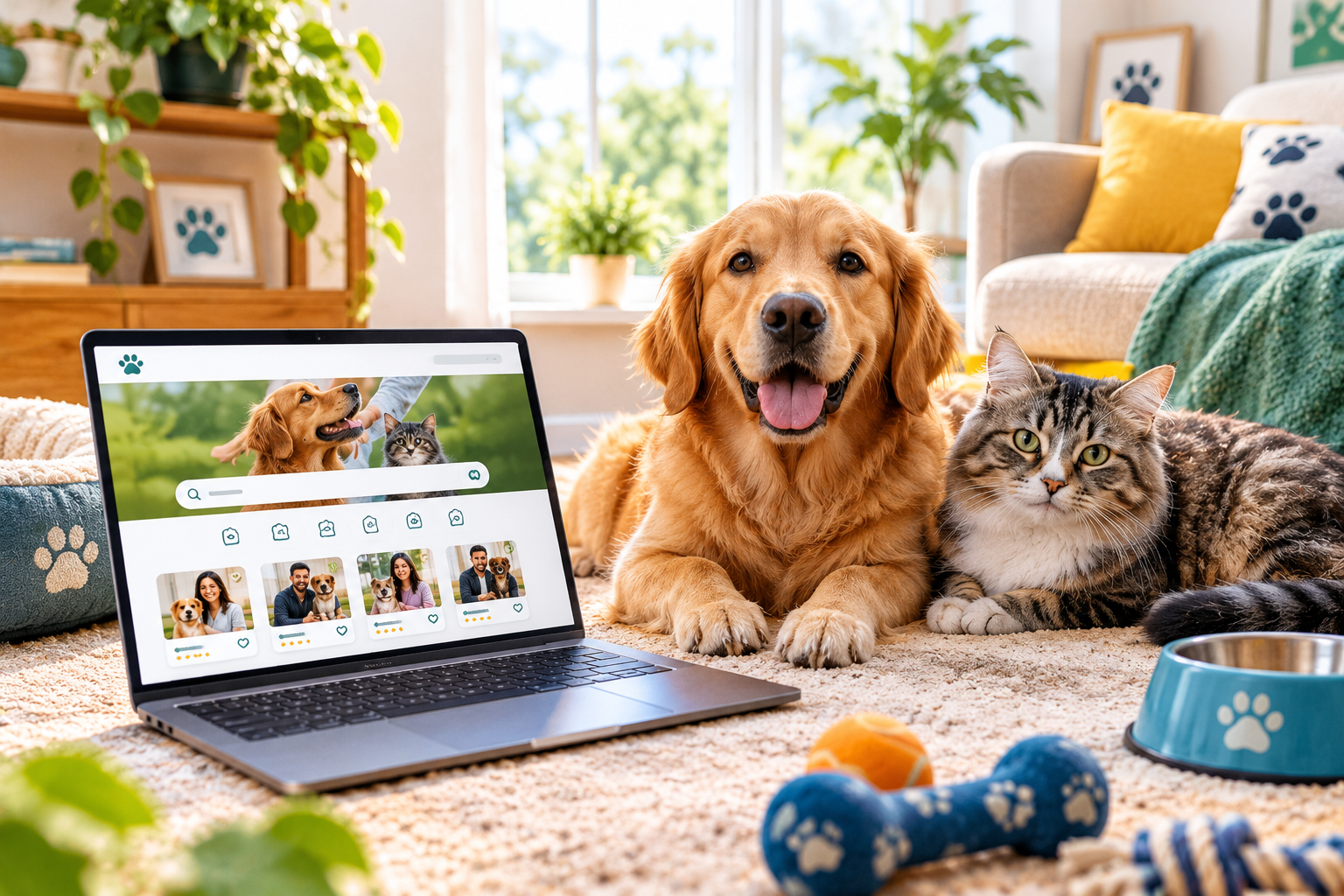
Finding someone trustworthy to care for your pet while you are traveling, working long hours, or managing other responsibilities can be challenging. Pets are more than animals; they are important members of the family who deserve attention, comfort, and proper care. Fortunately, online pet-care platforms have made it easier for pet owners to connect with people who can look after their furry companions.
One platform that has gained recognition in the pet-care industry is Rover. It connects pet parents with independent pet sitters, dog walkers, and other pet-care providers. Through its website and mobile applications, users can explore sitter profiles, compare services, read customer reviews, and arrange bookings according to their requirements.
In this Rover Review 2026, we will explore how the platform works, its major features, available services, pricing considerations, safety measures, advantages, and potential disadvantages. We will also examine whether Rover is a practical choice for pet owners seeking reliable care and whether it offers opportunities for people interested in earning money through pet sitting.
What Is Rover?
Rover is an online marketplace that connects pet owners with independent pet-care providers. Its primary purpose is to make finding pet care more convenient by allowing users to discover available sitters and walkers in their area.
Instead of relying exclusively on recommendations from friends, family members, or neighbors, pet owners can explore profiles from multiple providers. These profiles may include information about experience, services offered, availability, pricing, customer reviews, and the types of pets a sitter is comfortable caring for.
The platform supports several types of pet-care arrangements, including overnight boarding, house sitting, drop-in visits, dog walking, and doggy day care. The availability of particular services depends on the location and individual provider.
Rover acts as an intermediary rather than directly providing pet-care services. Pet owners and independent providers arrange their bookings through the platform, while the actual care is delivered by the selected sitter or walker.
Ready to explore pet-care options? Click Here to learn more about the platform and discover its available services.
How Does Rover Work?
Rover is designed to simplify the process of finding and booking pet care. Although individual experiences can differ, the general process involves searching for providers, reviewing their profiles, communicating with suitable candidates, and confirming a booking.
1. Create an Account
Pet owners typically begin by creating an account and providing basic information about themselves and their pets. A detailed pet profile helps potential sitters understand an animal’s personality, habits, routines, and care requirements.
For example, owners can explain whether their dog enjoys long walks, whether their cat needs medication, or whether their pet experiences anxiety around unfamiliar people.
Providing accurate information helps sitters determine whether they can comfortably meet the animal’s needs.
2. Search for Pet Sitters
After creating an account, users can search for available pet-care providers based on their location, required service, dates, and other preferences.
Depending on the available listings, users may be able to compare sitters according to customer ratings, reviews, prices, experience, and specific household requirements.
This makes it easier to create a shortlist rather than contacting multiple people without knowing whether they offer the services required.
3. Review Profiles and Contact Providers
Once suitable candidates appear in the search results, pet owners can examine their profiles and read feedback from previous customers.
It is worth looking beyond the overall star rating. Detailed reviews may provide useful information about punctuality, communication, cleanliness, experience with particular animals, and the quality of updates provided during a booking.
Owners can also contact prospective sitters to discuss expectations, availability, feeding instructions, emergency procedures, and other important details.
4. Arrange a Meet-and-Greet
A meet-and-greet is an important step before leaving a pet with someone unfamiliar.
It gives owners an opportunity to observe how a sitter interacts with their animal and discuss practical matters, including access to the home, exercise requirements, feeding schedules, and emergency contacts.
A friendly profile and positive reviews are useful starting points, but meeting the person and evaluating their suitability can provide additional reassurance.
5. Confirm the Booking
After selecting a provider, users can review the booking details, including dates, services, prices, and applicable cancellation terms.
Keeping communications and payments on the platform helps maintain a record of the arrangement and may be important for accessing eligible platform protections.
Explore the available options through Link Here if you want to investigate Rover before choosing a pet-care provider.
Main Features of Rover in 2026
Rover combines several features intended to make pet-care arrangements easier to organize. The usefulness of these features depends on the services available in a user’s area and the individual provider selected.
1. Multiple Pet-Care Services
One of Rover’s main advantages is that pet owners can look for different types of care through a single platform.
Dog boarding: Boarding allows a pet to stay overnight at a sitter’s home. This can be useful for vacations, business trips, or other situations in which an owner cannot provide care personally.
House sitting: With house sitting, a provider stays at the owner’s home while caring for the pet. This arrangement may suit animals that feel more comfortable in familiar surroundings.
Drop-in visits: Drop-in visits involve a sitter visiting the home for an agreed period. These visits can include feeding, refreshing water, cleaning litter boxes, playtime, and bathroom breaks.
Dog walking: Owners can arrange walks for dogs that need exercise while their owners are working or otherwise unavailable.
Doggy day care: Day care provides supervision and companionship during the day, potentially helping owners who work outside the home.
Not every provider offers every service. Availability should therefore be checked before making plans.
2. Detailed Sitter Profiles
A sitter’s profile is an important resource when comparing candidates.
Profiles can contain information about previous experience, the animals a provider accepts, household arrangements, availability, and personal approaches to pet care. Customer reviews can provide additional context.
Owners should look for experience relevant to their own pets. Someone who regularly cares for energetic young dogs may not automatically be the best match for an elderly cat or an animal with complex needs.
3. Reviews and Ratings
Customer reviews help prospective clients understand other pet owners’ experiences.
A consistently positive history can be encouraging, particularly when reviewers describe situations similar to the one a prospective customer faces.
However, ratings should not be treated as a guarantee of future performance. Read several recent reviews and look for recurring details about communication, reliability, animal handling, and following instructions.
4. Search Filters
Search filters can help users narrow down potential providers according to their needs.
Depending on the service and location, relevant preferences may include dates, service type, pet requirements, and household conditions.
These tools are particularly useful when an owner has specific requirements, such as finding someone experienced with multiple dogs or a provider who can accommodate an animal with separation anxiety.
5. Messaging and Updates
Communication is essential when someone else is caring for a pet.
Rover supports communication between pet owners and providers, helping both parties discuss expectations before a booking. Depending on the service, owners may also receive photos, messages, or other updates.
For dog walks and drop-in visits, Rover describes features that can include photo updates and GPS walk maps.
These tools can help owners stay informed, although the frequency and detail of communication may vary by provider and service.
Want to compare pet-care services for your next trip? Click Here to explore Rover and review the options available for your requirements.
Rover Pricing: How Much Does It Cost?
Pricing is one of the most important considerations when choosing a pet-sitting service. Rover does not have one universal rate for every booking because providers set their own prices and costs can vary according to location, service type, dates, and the number of pets.
For example, overnight boarding may be priced differently from a short drop-in visit. Holiday periods may also affect availability and rates.
Factors That Affect Pricing
Several factors can influence the total amount paid:
- Type of service: Overnight boarding, house sitting, day care, and walking have different time commitments.
- Location: Prices can vary significantly between cities and neighborhoods.
- Duration: Longer bookings may cost more than shorter visits.
- Number of pets: Some providers charge additional amounts for extra animals.
- Special requirements: Medication schedules, additional supervision, or other specific needs may affect the price.
- Peak dates: Demand during popular travel periods can influence provider rates.
Does Rover Charge Service Fees?
Yes. Rover may charge service fees, and the exact structure depends on the country and applicable booking terms.
For example, Rover’s US help center describes an 11% booking fee for pet owners at checkout, subject to the platform’s stated conditions. The fee structure can differ in other countries, so users should review the current checkout breakdown rather than assuming the same percentage applies everywhere.
The listed price and final checkout total should both be considered when comparing providers.
It is also important to check cancellation terms before confirming a booking. Refund eligibility can depend on the applicable policy and the circumstances of the cancellation.
Is Rover Affordable?
Rover may be affordable for owners who can find a provider whose rates fit their budget. However, it is not necessarily the cheapest option in every location.
A local independent sitter may charge less, while a highly experienced professional may charge more. Comparing the total cost alongside experience, convenience, communication, and the suitability of the care arrangement is more useful than focusing only on the lowest price.
To review the platform and its available pet-care arrangements, visit Rover through Link Here.
Is Rover Safe for Pet Owners?
Safety is a major concern whenever an owner entrusts an animal to another person.
Rover provides several features intended to support safer interactions, but pet owners should understand both the benefits and the limitations of these measures.
Background Checks and Identity Verification
Rover describes screening measures for sitters and dog walkers, including background checks or identity verification, depending on the applicable program and location.
These measures can help owners make more informed decisions. However, a screening process does not guarantee that an individual will always behave responsibly or provide appropriate care.
Rover’s terms also explain that screening is limited and that pet owners remain responsible for evaluating the suitability of their chosen provider.
Rover Guarantee and RoverProtect
Rover provides safety-related resources and protections for eligible bookings.
Its published safety information describes the Rover Guarantee as including reimbursement for eligible veterinary expenses, subject to the program’s terms and conditions. Rover’s current safety materials also describe additional support features under its RoverProtect framework.
These protections should not be interpreted as comprehensive pet insurance. Coverage has limitations, exclusions, and eligibility requirements, so owners should review the applicable terms before relying on reimbursement for a particular incident.
Customer Support
Rover advertises support resources for pet owners and providers, including assistance for emergencies.
Having a support channel can be helpful if a booking is disrupted or a concern arises. Nevertheless, owners should not assume that every issue will be resolved instantly or that support can eliminate every risk.
For animals with serious medical needs, owners should prepare emergency instructions, provide veterinary contact information, and confirm that the selected sitter can manage the situation appropriately.
Practical Safety Tips
Before booking a sitter, consider these precautions:
- Arrange a meet-and-greet whenever possible.
- Read detailed reviews rather than relying exclusively on ratings.
- Confirm experience with your pet’s breed, size, temperament, or medical needs.
- Explain feeding routines, exercise requirements, medications, and behavioral concerns.
- Provide emergency contact details and your veterinarian’s information.
- Keep booking communications and payments on the platform.
- Confirm the sitter’s arrangements for overnight stays, other animals, and household supervision.
- Review cancellation policies and applicable protection terms.
These steps are useful regardless of which pet-care platform you choose.
Pros and Cons of Rover
Before deciding whether Rover is right for you, it helps to consider its main strengths and limitations.
Pros of Rover
1. Convenient search process
Rover allows pet owners to browse multiple providers without relying entirely on personal recommendations. This can save time when searching for care in an unfamiliar location.
2. Several service options
The platform supports different care arrangements, from short visits to overnight boarding. This flexibility helps owners choose services according to their schedules and pets’ needs.
3. Reviews and profiles
Provider profiles and customer feedback make it easier to compare potential sitters and identify candidates with relevant experience.
4. Direct communication
Messaging tools allow owners to ask questions, explain expectations, and discuss care instructions before confirming a booking.
5. Platform-based payments
Online booking and payment arrangements can make transactions more organized and provide a record of the agreed services.
6. Safety resources
Screening processes, support resources, and eligible booking protections provide additional safeguards, although they cannot remove every risk.
Cons of Rover
1. Service fees
Additional booking fees can increase the final cost. Providers may also have platform fees deducted from their earnings.
2. Provider quality varies
Rover connects users with independent providers, so experience, reliability, and service quality are not identical across listings.
3. Availability depends on location
Owners in areas with fewer participating providers may have limited choices, particularly during holidays or for specialized care.
4. Screening has limitations
Background checks and identity verification cannot guarantee suitable behavior or high-quality pet care.
5. Cancellation can disrupt plans
A provider may become unavailable, potentially creating difficulties for owners who need care at short notice. Platform assistance may be available under applicable conditions, but alternative arrangements are not guaranteed.
6. Not every pet is suited to every sitter
Animals with complex medical needs, severe behavioral challenges, or special handling requirements may need a professional with specific qualifications and experience.
Explore the available options through Click Here before deciding whether Rover suits your pet-care requirements.
Rover for Pet Sitters: Can You Earn Money?
Rover is not only for pet owners. It also provides an opportunity for eligible individuals to offer pet-care services and connect with potential customers.
People who enjoy spending time with animals may consider offering dog walking, boarding, drop-in visits, or house sitting through the platform.
However, pet sitting should be approached as a responsibility rather than simply an easy way to make money.
How Does Becoming a Sitter Work?
Prospective sitters generally create a profile, describe their experience, select the services they want to offer, set their rates, and complete the applicable screening and approval requirements.
Rover’s US help center states that sitters and dog walkers must be at least 18 years old. Requirements and processes may vary by location.
Providers should be honest about their experience and accept bookings only when they can meet the animal’s needs.
How Much Can Sitters Earn?
Earnings depend on the services offered, local demand, rates, booking frequency, and expenses.
According to Rover’s US help center, providers generally receive 80% of their booking earnings after the standard 20% service fee, although exceptions and different arrangements may apply.
For example, a provider charging $50 for a booking would generally receive $40 before any other personal business expenses, assuming the standard fee applies.
That calculation is illustrative rather than a promise of earnings. Actual income can vary, and sitters should check the current terms applicable to their accounts.
Advantages for Sitters
Rover can help providers reach customers who are actively searching for pet care. Profiles and reviews can also help experienced sitters establish a reputation over time.
The platform may simplify communication, scheduling, and payment collection.
However, providers should account for their time, transportation, supplies, insurance needs, taxes, and any expenses associated with caring for animals.
Interested in exploring the platform? Link Here provides a starting point for learning more about Rover’s pet-care marketplace.
Who Should Use Rover?
Rover can be useful for several types of pet owners, depending on local availability and individual requirements.
Frequent Travelers
People who regularly travel for work, vacations, or family commitments may appreciate having several pet-care options in one place.
Overnight boarding and house sitting can be particularly helpful when pets need care for multiple days.
Busy Professionals
Owners with demanding work schedules may benefit from drop-in visits, dog walking, or day care.
These services can help maintain a pet’s routine when the owner cannot be home throughout the day.
First-Time Pet Owners
People who are new to pet ownership may find provider profiles and reviews helpful when learning how to evaluate care options.
However, first-time owners should still ask questions and choose someone who understands the specific needs of their animal.
Owners Seeking Flexible Arrangements
Some pets need occasional visits rather than full-time supervision. Rover’s range of services can make it easier to find an arrangement that matches the situation.
Owners of Senior Pets
Owners of older animals may also find suitable providers, but they should carefully assess experience with mobility limitations, medication routines, and age-related care requirements.
For pets with significant medical needs, it is particularly important to confirm that the sitter has the appropriate experience and can respond to emergencies.
Rover vs. Traditional Pet Sitters
Rover and traditional independent pet sitters can both be useful, but they offer different advantages.
Rover provides a searchable marketplace where owners can compare profiles, reviews, services, and prices. Its platform-based booking tools can make arranging care more convenient.
Traditional sitters may rely on referrals, local advertising, or established relationships. A trusted neighborhood sitter can be an excellent choice, particularly when they already know the pet and understand its routines.
Neither option is automatically better.
Rover may appeal to owners who value convenient searching and a centralized booking process. An independent sitter may appeal to someone who prefers a direct relationship or has a trusted recommendation.
The most important factors are the provider’s suitability, experience, communication, availability, and ability to meet the animal’s needs.
Tips for Getting the Best Results from Rover
If you decide to use Rover, a few practical steps can help you make a more informed choice.
Start searching early. Waiting until the last minute may reduce your options, especially during busy travel periods.
Write a complete pet profile. Include feeding schedules, exercise needs, medical instructions, behavioral concerns, and emergency contacts.
Compare several providers. Look at experience, reviews, availability, services, and total prices before making a decision.
Ask specific questions. Find out how the sitter handles emergencies, supervises pets, communicates with owners, and manages the requested care routine.
Arrange an introduction. When practical, let your pet meet the sitter before the booking begins.
Confirm the details in writing. Make sure dates, times, services, pricing, and special instructions are clear.
Keep expectations realistic. A high rating is useful evidence, but no online profile can guarantee a perfect experience.
Have a backup plan. Keep contact details for another potential provider in case your original arrangement changes.
Review the terms. Understand cancellation policies, payment requirements, and any applicable protection or reimbursement limitations before confirming your booking.
Use Click Here to explore Rover and begin comparing available pet-care arrangements.
Frequently Asked Questions About Rover
1. Is Rover a legitimate pet-sitting platform?
Rover is an established online marketplace that connects pet owners with independent pet-care providers. It offers profiles, reviews, booking tools, and safety-related resources. However, owners should evaluate each provider carefully because using the platform does not guarantee a particular standard of care.
2. Is Rover free to use?
Pet owners can generally create accounts and search for providers without paying a membership fee. However, booking fees and the cost of the actual pet-care service may apply. Check the final checkout amount for your location.
3. Does Rover offer overnight pet sitting?
Yes. Rover supports overnight boarding at a sitter’s home and house sitting at the pet owner’s home, subject to local availability and individual provider offerings.
4. Can I find cat sitters on Rover?
Yes. Rover supports cat-care services in locations where suitable providers are available. Depending on the listing, services may include drop-in visits or other arrangements. Check each sitter’s profile for relevant experience.
5. Does Rover guarantee that every sitter is safe?
No. Screening procedures and safety resources can help reduce certain risks, but they cannot guarantee an individual’s behavior or performance. Owners should review profiles, communicate with candidates, and arrange a meet-and-greet where possible.
6. Can I cancel a Rover booking?
Cancellation is generally possible according to the terms of the booking and the provider’s cancellation policy. Refund eligibility depends on the applicable conditions, so review the policy before confirming.
7. Can I become a pet sitter on Rover?
Eligible individuals can apply to provide services through the platform. The process may involve creating a profile, completing screening requirements, and meeting applicable eligibility conditions.
8. Is Rover better than hiring a local sitter?
It depends on your needs. Rover offers convenient searching, reviews, and booking tools, while a trusted local sitter may provide a more established personal relationship. Compare experience, availability, costs, and suitability before deciding.
Final Verdict: Is Rover Worth Using in 2026?
Rover remains a useful option for pet owners who want a convenient way to discover and compare pet-care providers. Its range of services, searchable profiles, customer reviews, messaging tools, and booking features can simplify the process of arranging care.
The platform is particularly appealing to frequent travelers, busy professionals, and owners who want to compare several providers before making a decision. It can also offer opportunities for eligible individuals who want to build a pet-sitting or dog-walking business.
Nevertheless, Rover is not a substitute for careful judgment. Provider quality varies, service fees can increase the total cost, and screening measures cannot eliminate every risk. Owners should review profiles thoroughly, communicate their expectations, and confirm that a sitter can meet their pet’s specific needs.
Our verdict: Rover is worth considering if you value convenience, choice, and an organized booking process. Its overall value depends on the availability of suitable providers in your area, the cost of the service, and the quality of the person you ultimately select.
Before making a booking, compare multiple sitters, arrange an introduction when possible, and review the applicable booking and safety terms.
If you are ready to investigate your options, Link Here can help you get started with Rover and explore the pet-care services available for your requirements.
Disclaimer: This article is intended for informational purposes only. Service availability, fees, screening procedures, and protection terms may change and can vary by location. Always consult Rover’s current official information and review the terms of your specific booking before making a decision.